Key takeaways
- Ventilation and dust control protect horse health.
- Stalls need safe hardware and enough room.
- Aisle width and traction affect safety.
- Good lighting, water and storage make daily care faster.
Stalls and doors
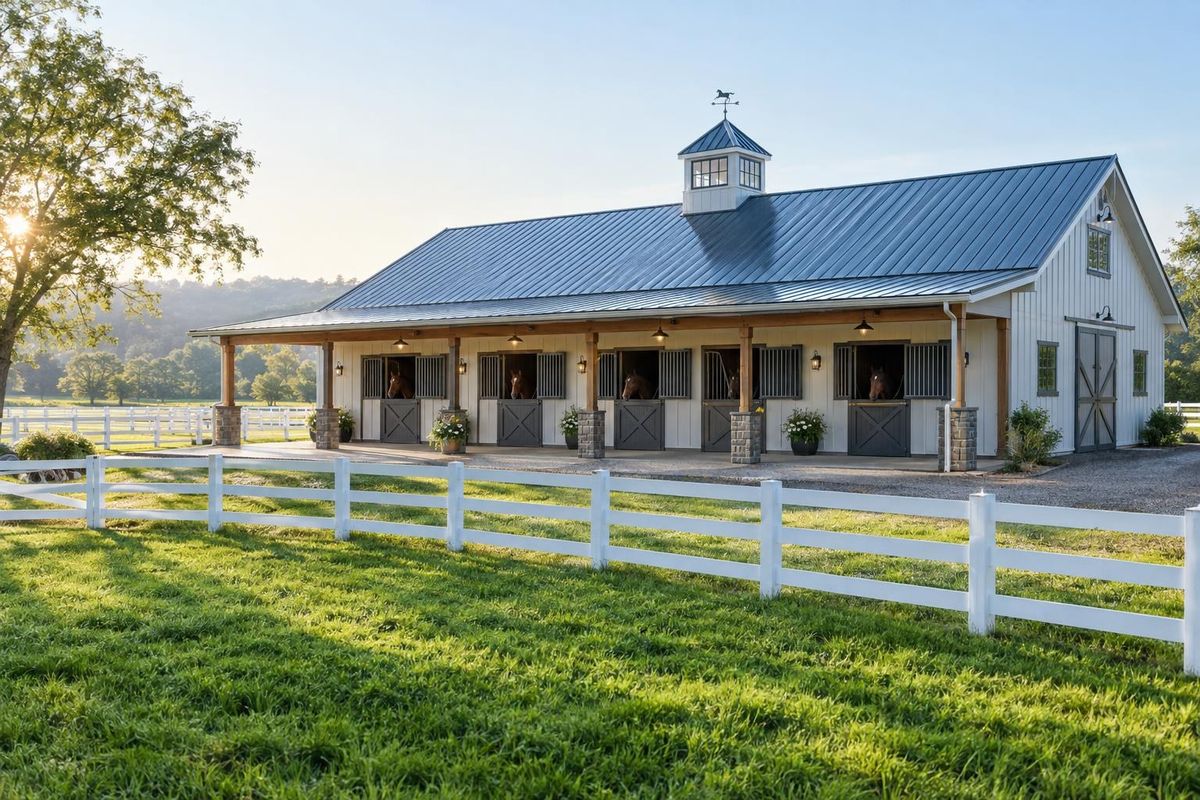
Stalls should be roomy, with smooth walls, strong kickboards and latches horses cannot open. Dutch doors give airflow and a view. Grills or partitions allow horses to see each other, which helps them stay calm.
Aisles, floors and traffic
A wide aisle with good traction makes handling safer. Rubber pavers, textured concrete and stone dust are common. Plan drains so water does not pool, and keep walkways clear of obstacles.
Air, light and water
Horses need fresh air more than warmth. Ridge vents, windows and open doors help. Bright LED light helps people see well, and frost-free hydrants or automatic waterers make daily care easy.
Rooms and storage
A tack room, feed room and wash bay keep chores organized. Store hay in a separate area or building when you can, for fire safety and cleaner air.
Quick answers
What size should a stall be?
Twelve by twelve feet is common for a full-size horse.
Should the barn be insulated?
It helps with condensation, but ventilation is the priority.
Which floor works well?
Rubber mats or pavers over a compacted base are popular choices.