
Key takeaways
- Start with what the barn must do, not with the size.
- Study the site: slope, drainage, access, soil and utilities.
- Choose a structure and shell that suit your use and your care preferences.
- Check zoning, permits and setbacks early.
Start with the purpose
List every job the barn must do. Will it shelter horses or livestock, store hay and equipment, house a workshop, host events or include living space? Each use drives the size, the height of the doors and eaves, the floor type, the ventilation and the utilities.
Think about how the use may change. Many owners add a lean-to, a loft or a shop later, and planning for it from the start is easier than retrofitting.
Study the site
Walk the land and note slopes, wet spots, trees, existing lanes, power and water sources and the direction of prevailing wind. The barn should sit on high, well-drained ground with good access for trucks and trailers.
A level pad built with compacted stone and good drainage avoids most future problems.
Choose the structure and shell
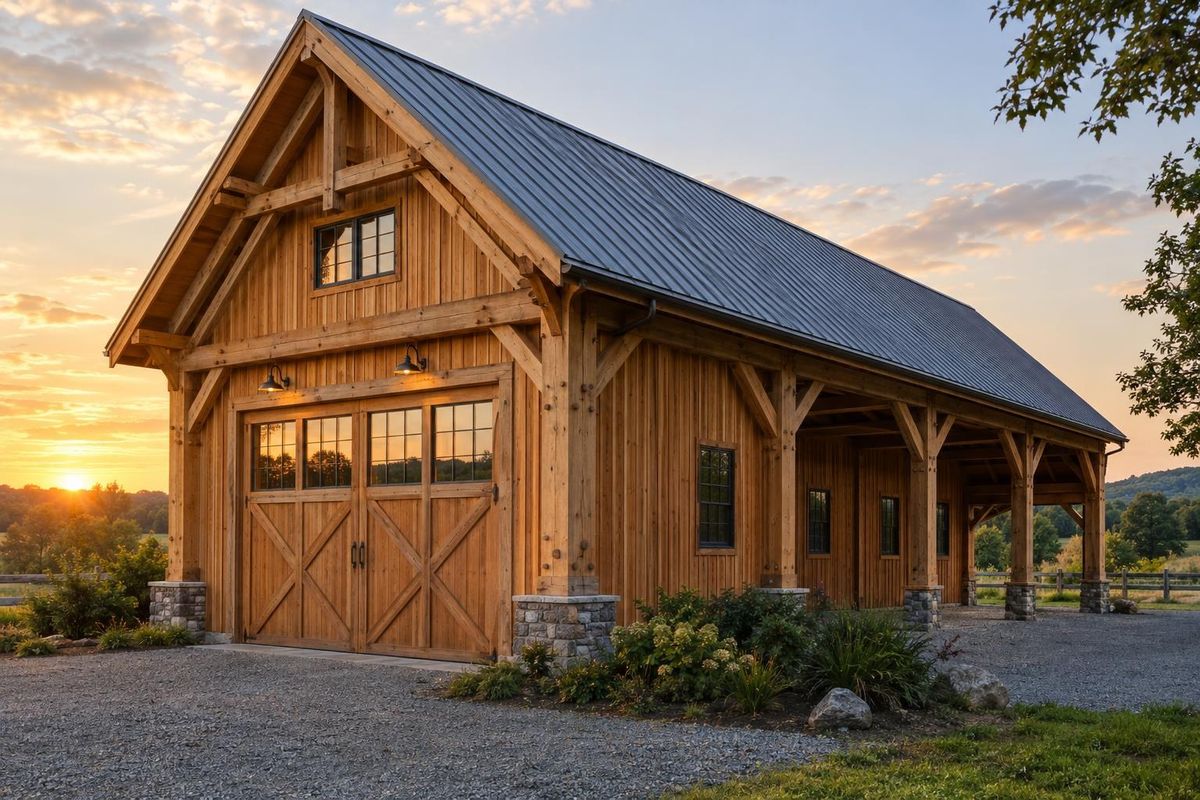
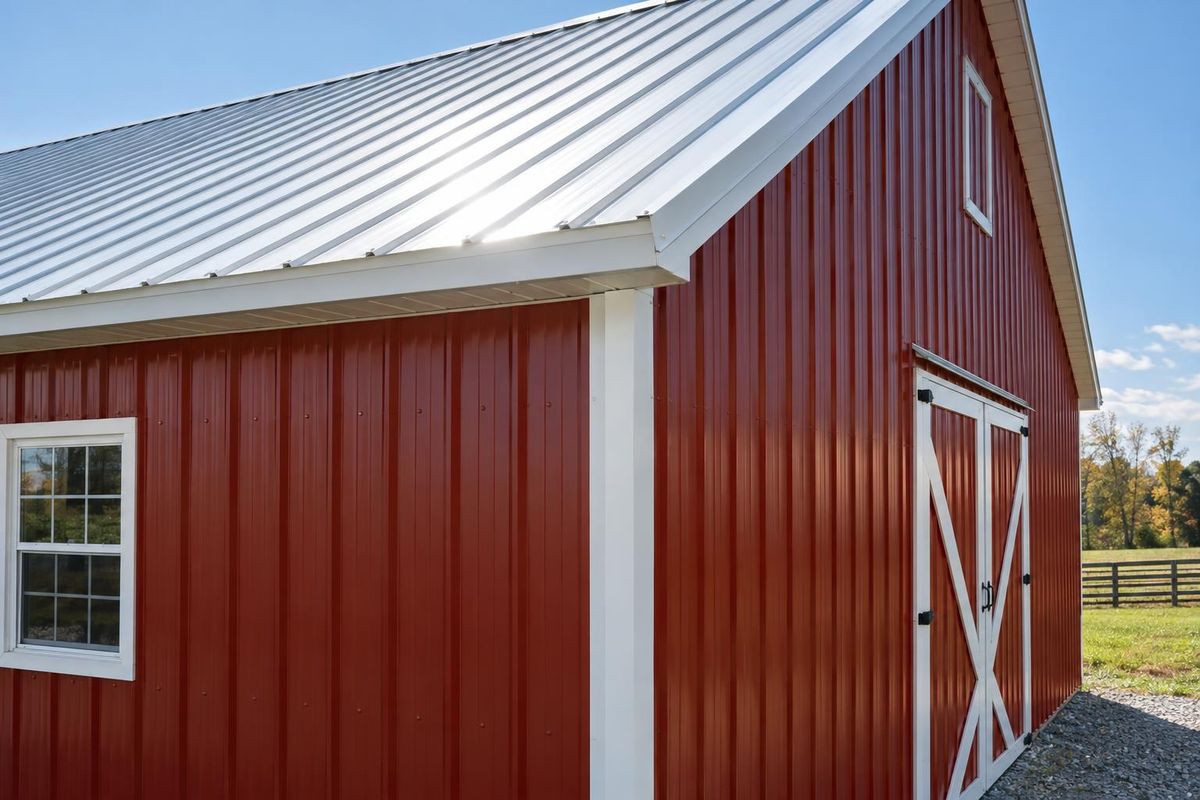
Pole barns go up quickly and cover wide spans. Post-and-beam barns offer exposed timbers and a classic look. Stick-built barns with foundations suit some designs. For the shell, metal is durable and low-maintenance, and wood siding offers the traditional look.
Decide early on doors, windows, ventilation and insulation, since they affect framing.
Check the rules and plan the build
Counties set setbacks, size limits and permit requirements, and buildings with living space or guests face stricter rules. Ask your builder for drawings, a schedule and a list of inspections.
Finally, plan how you will care for the barn. A simple seasonal routine keeps it sound for decades.
Quick answers
How big should my barn be?
Size it for the use plus growth. Our size guide walks through typical dimensions.
How long does planning take?
A simple barn can be planned in a few conversations. Larger or custom projects take longer.
When should I start planning?
Any time. Starting before the busy building season gives you more scheduling choices.